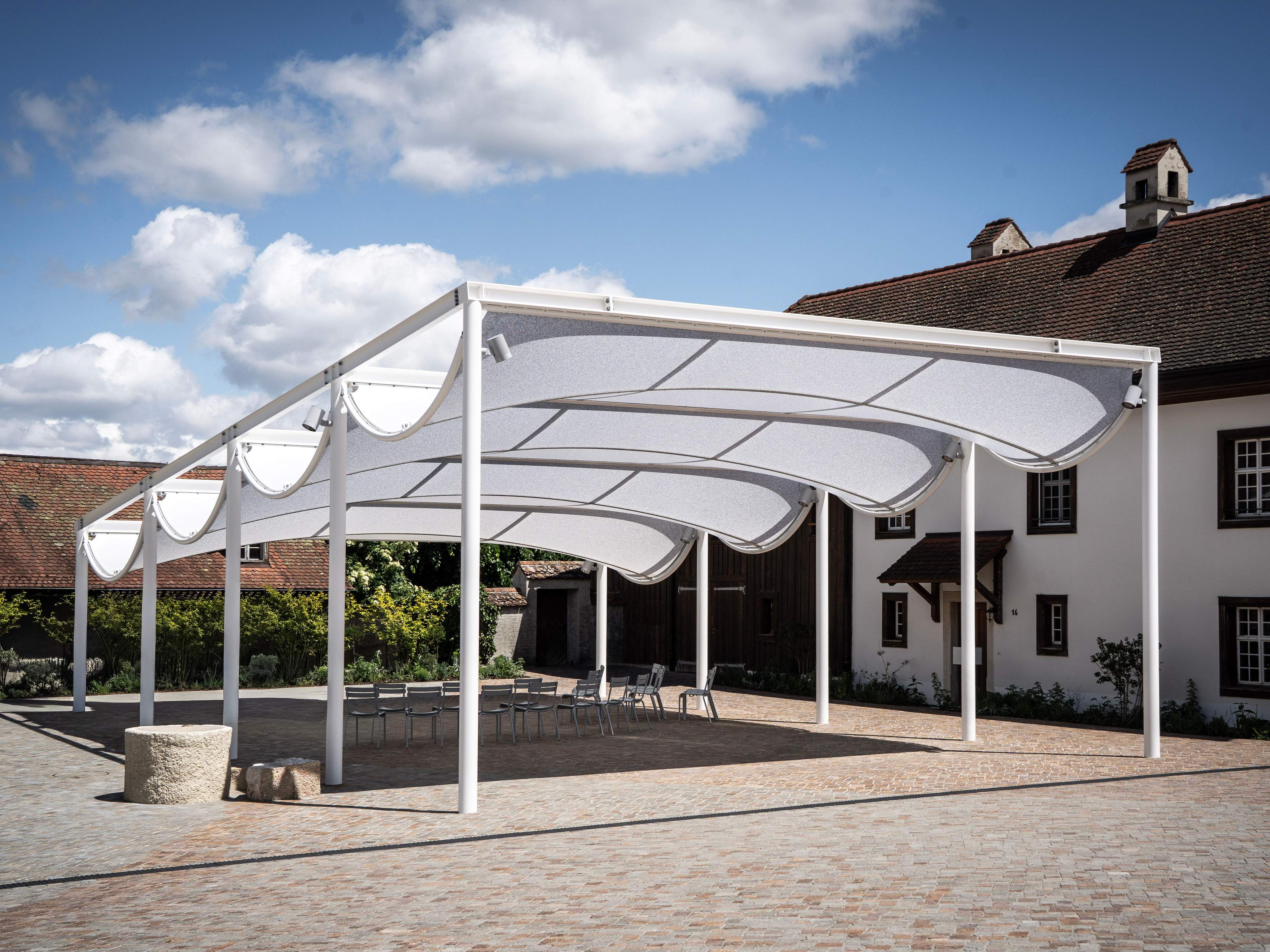
Pilgrim Forum on the Monastery Square, Mariastein
Project overview
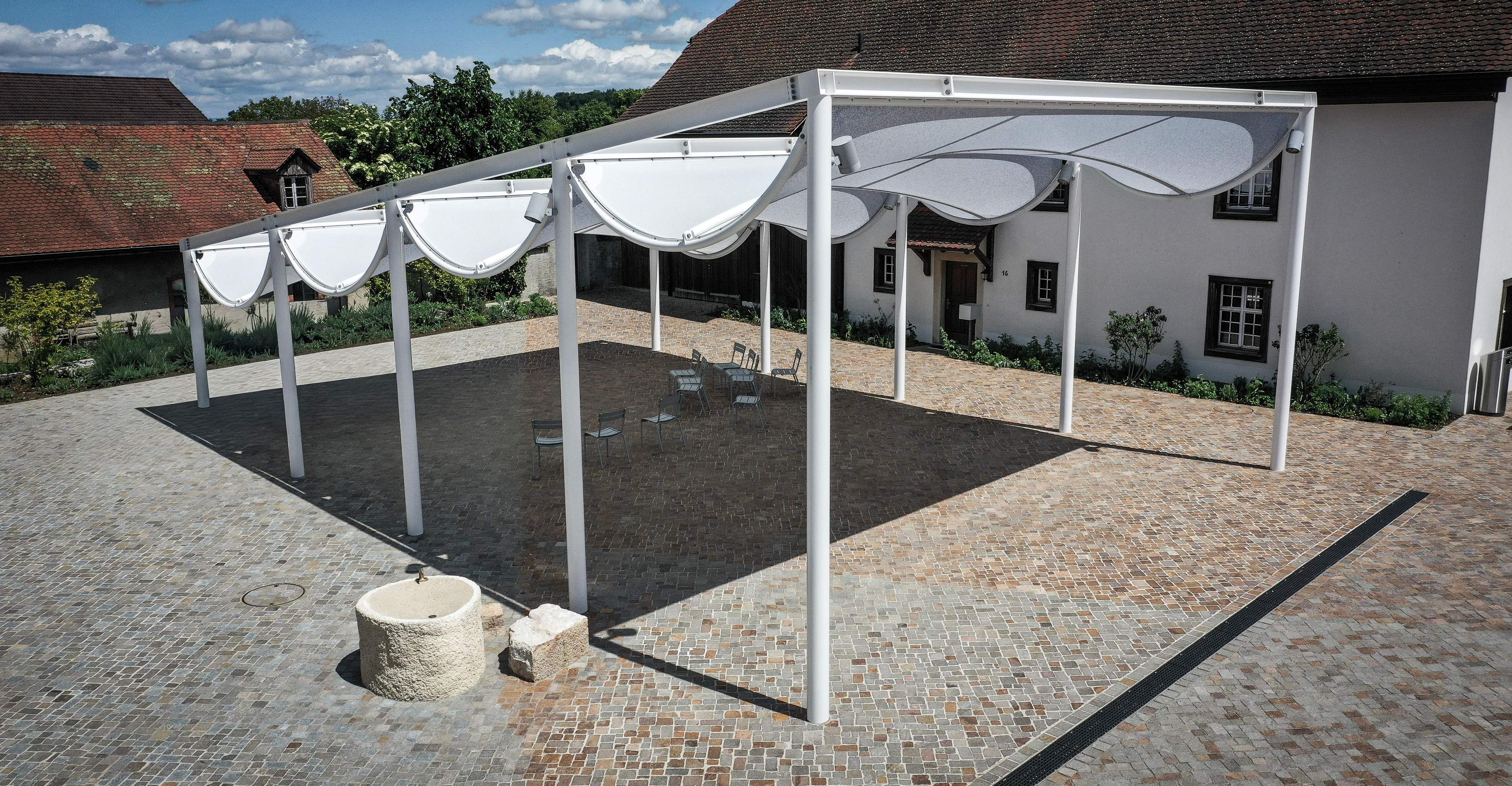
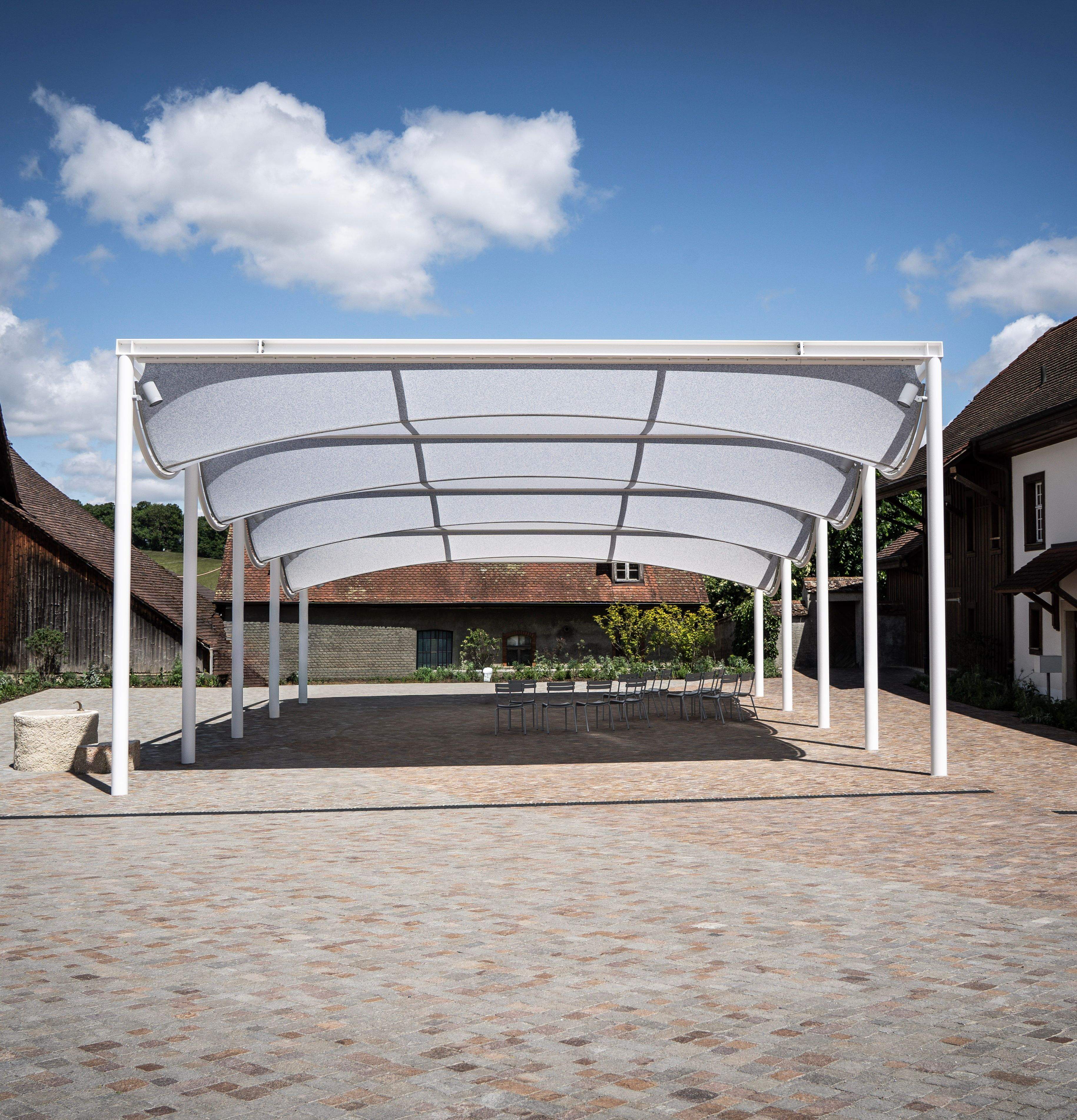
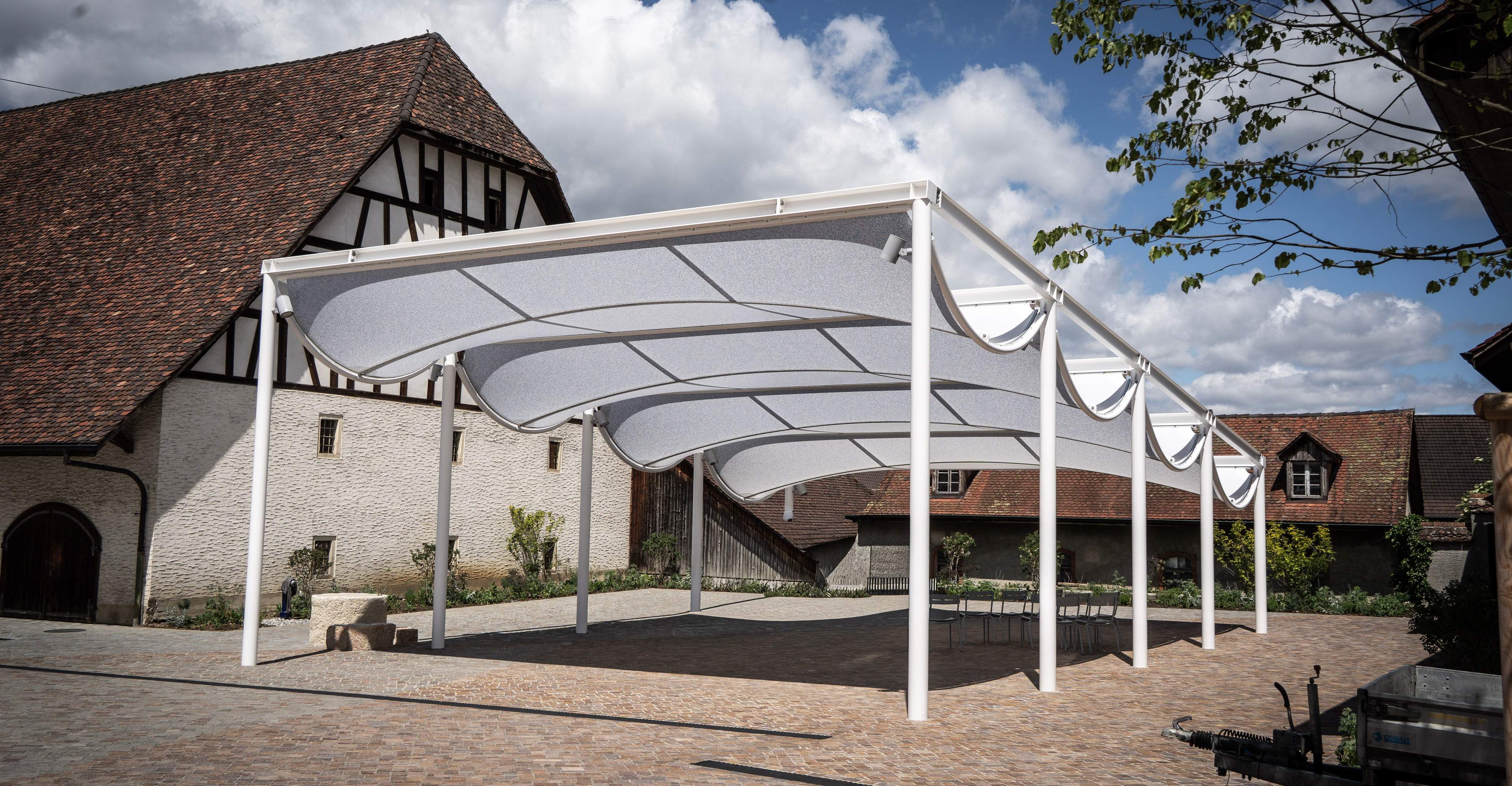
As part of the redesign of the monastery square in Mariastein, an open pavilion was developed as a sheltered place for gathering, exchange, and small public events. Combining a steel primary structure with a translucent membrane roof, the project transforms an architecturally expressive idea into a precise and buildable structural concept.
Developed in close dialogue with Atelier Ehrenklau Hemmerling from an early project stage, the pavilion was conceived as an atmospheric and clearly defined public structure. Its architectural quality lies in the interplay of spatial presence, transparency, and structural clarity.
Details
My involvement began in the early concept phase in an advisory role. Together with the architects, I took part in a workshop process to examine different spatial and structural scenarios based on the competition design. Building on this, I developed several solution proposals and prepared a feasibility study in the form of a preliminary design.
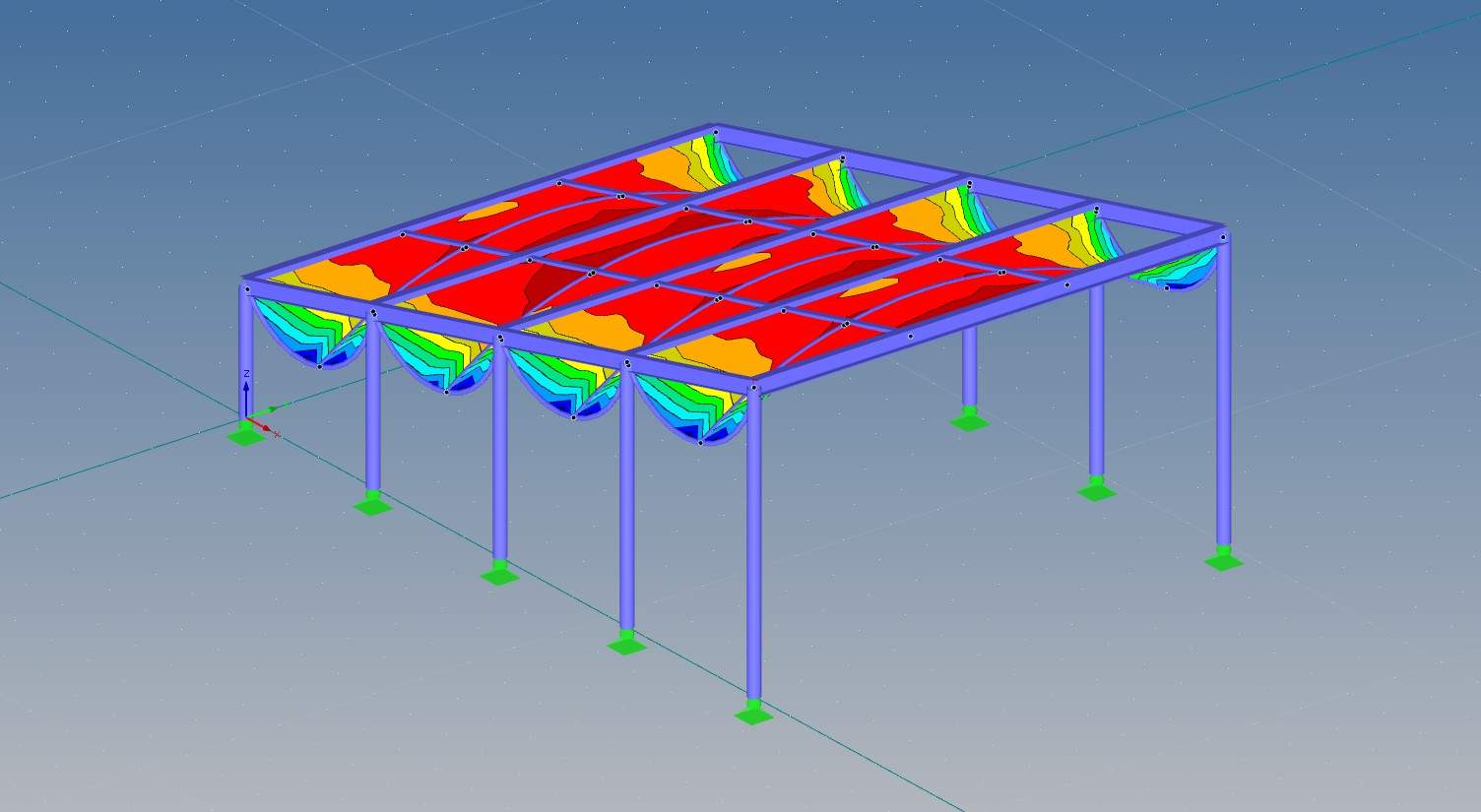
The study incorporated the existing site conditions, including underground service plans and the geotechnical report. It formed the basis for the subsequent project development and resulted in a use agreement, a project basis, preliminary structural analysis, and principal details for execution. My scope covered the membrane structure, the steel structure, and the foundations, with particular attention given to the seismic requirements of the site.
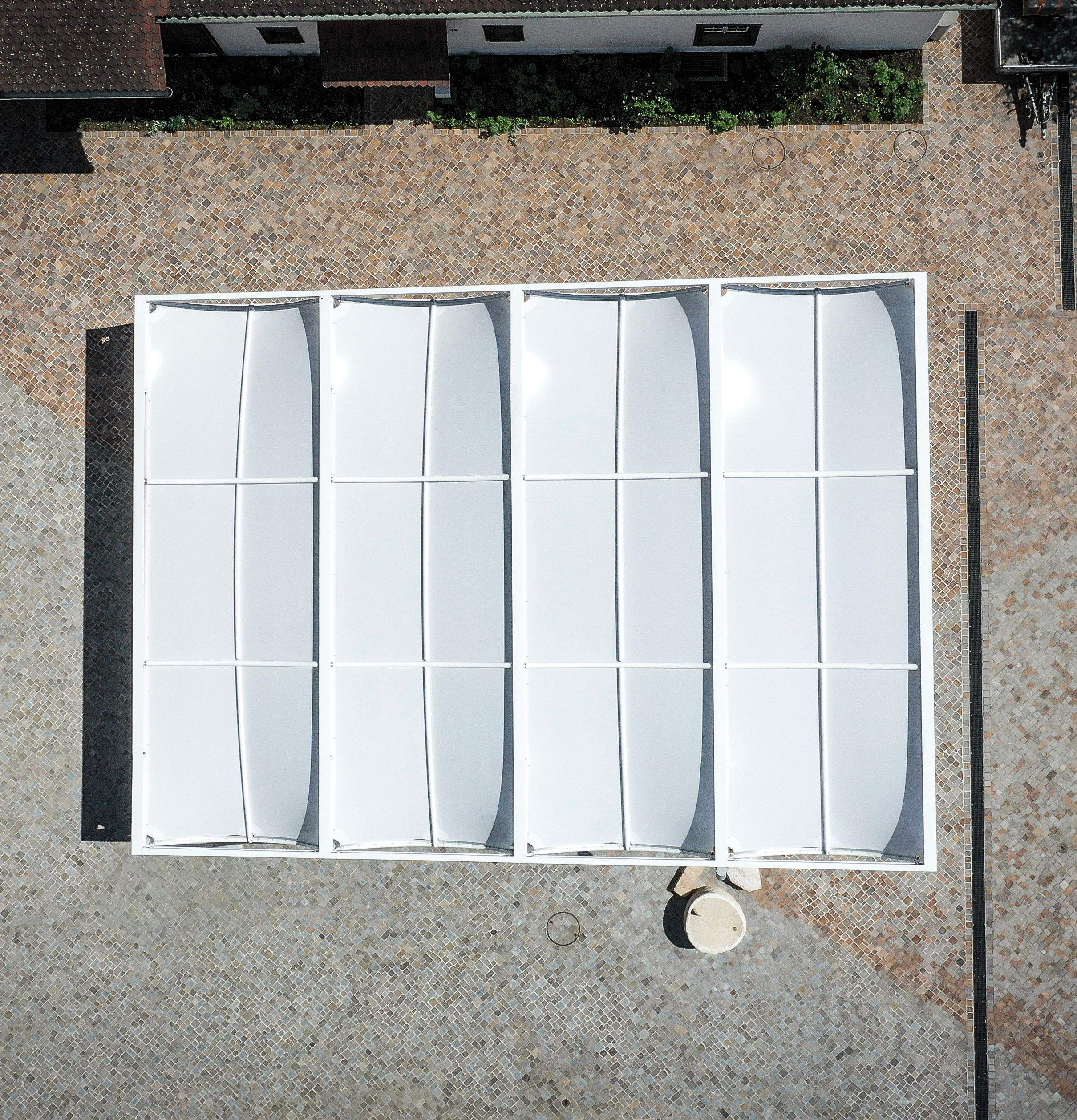
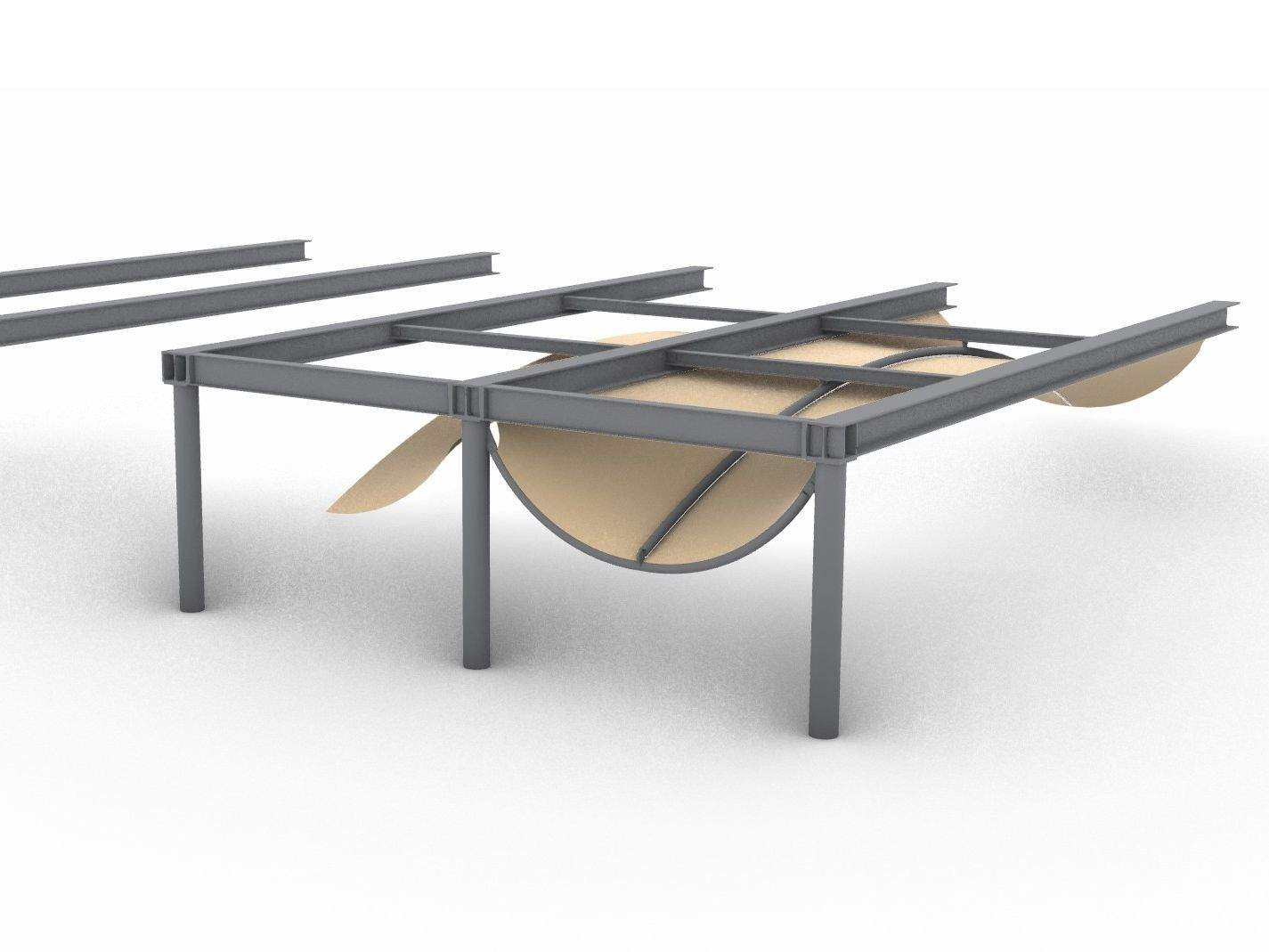
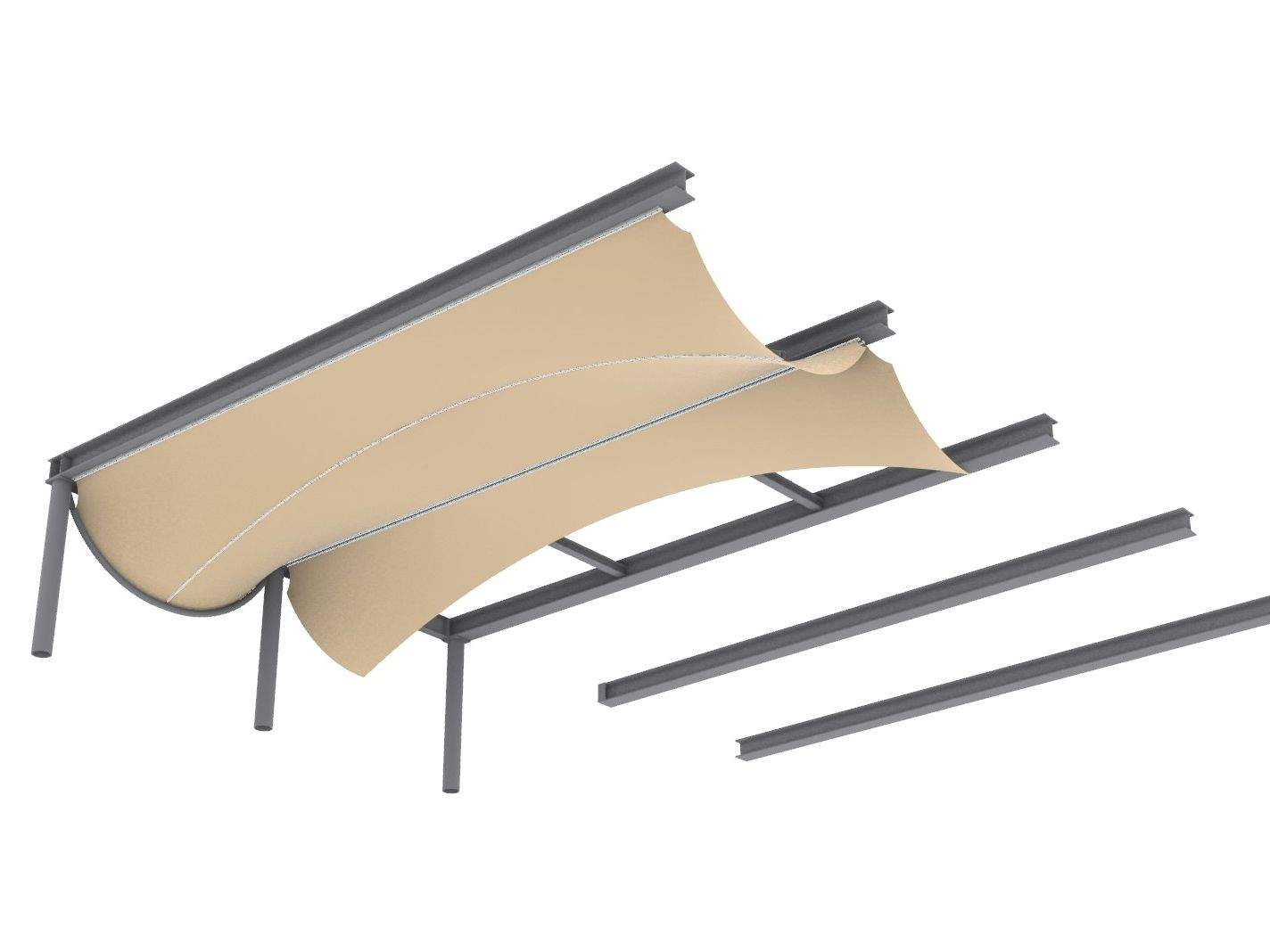
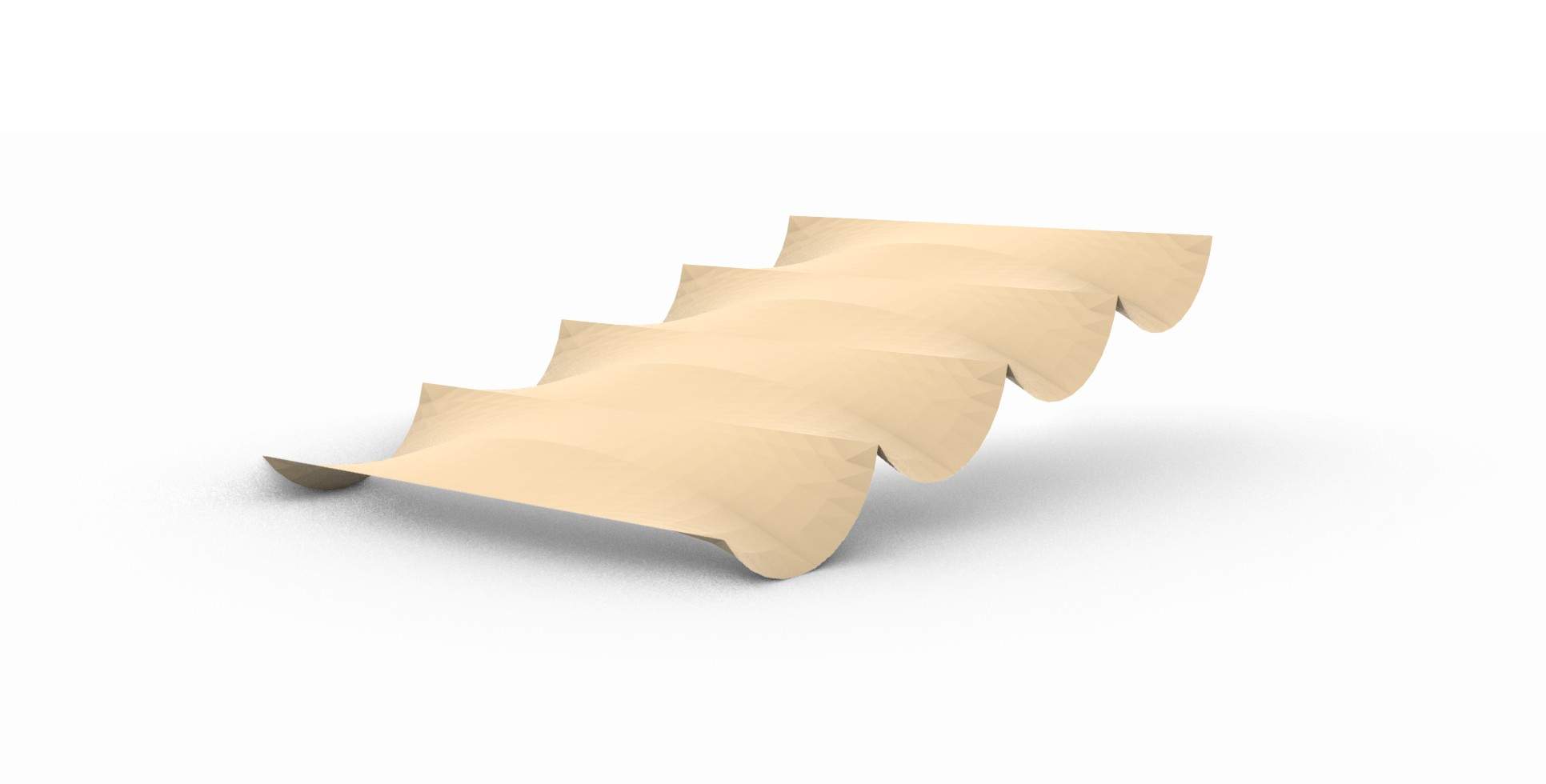
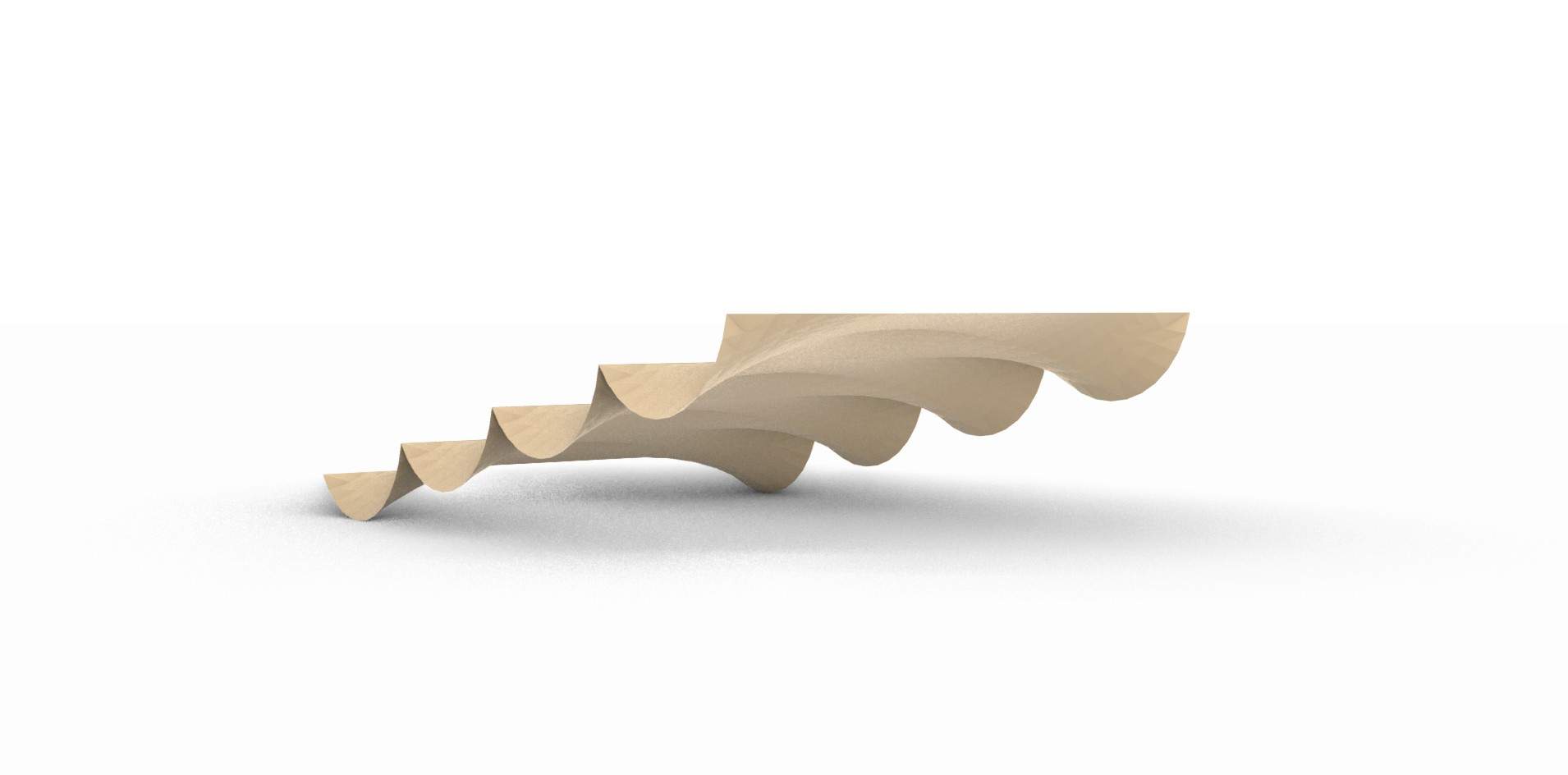
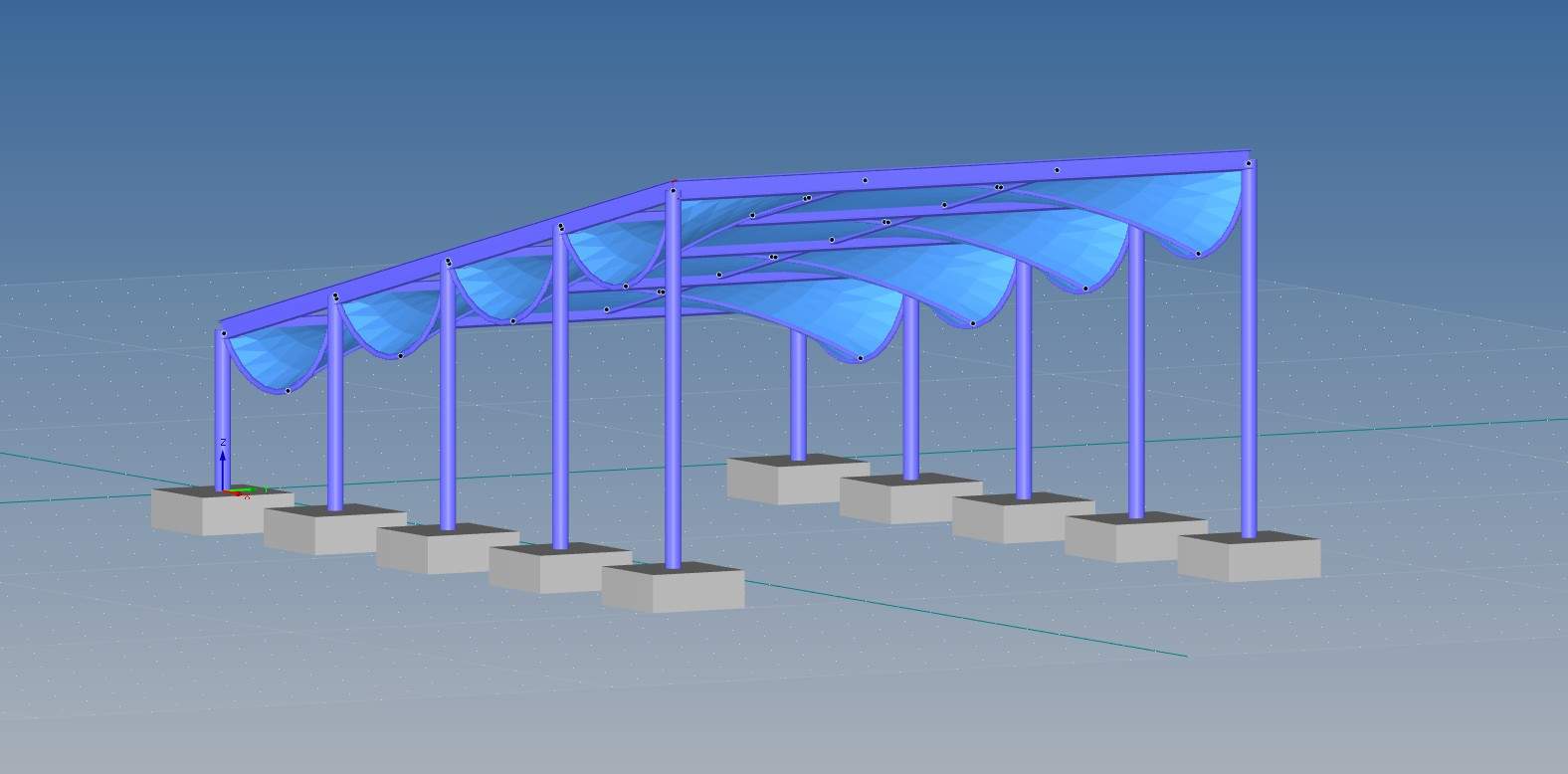
The roof consists of a form-active membrane surface developed through a form-finding process. At the same time, the geometry was deliberately shaped to meet the architectural intent, resulting in a system with a comparatively high proportion of steel. Rather than a classical ultralight membrane structure, the pavilion represents a carefully balanced hybrid of membrane architecture and steel engineering.
A distinctive feature of the project is the visual effect of the roof membrane. A highly translucent PVC-PES architectural fabric was combined with a digitally printed parametric pattern, creating a dynamic interaction of light, depth, and atmosphere beneath the canopy.
Specifications
Plan dimensions | 14.0 x 10.0 m |
Heights | 2.45–5.75 m |
Structural system | Steel primary structure on 8 steel columns |
Date | 2024 - 2026 |
Status | Realized |
My role
I played a key role in the early technical development of the pavilion. My work included concept-stage advisory input, scenario studies, feasibility work, preliminary design, form-finding, preliminary structural analysis, and the development of principal execution details for the membrane, steel structure, and foundations.
A central part of my contribution was the early definition of the static concept, the principal detailing strategy, and the mounting logic. This allowed the project team to make informed decisions at a stage when the essential architectural and technical parameters were still being established.
As the project progressed and the comparatively high steel content called for more detailed engineering input, Alfred Rein Ingenieure GmbH was brought in for the detailed execution planning of the steel structure. At that point, I handed over project management internally and continued to accompany the project in an advisory capacity. In that sense, I helped shape the project strategically from an early stage and remained involved wherever key technical decisions and interfaces required clarification.
My sketches
Notes
This project was developed during my time at Bieri Tenta AG. The content presented here reflects my personal contribution to the early design development, feasibility work, and technical concept of the pavilion.
All photos are copyright protected by ©Bieri Tenta AG