Technical Notes – Going Back to First Principles
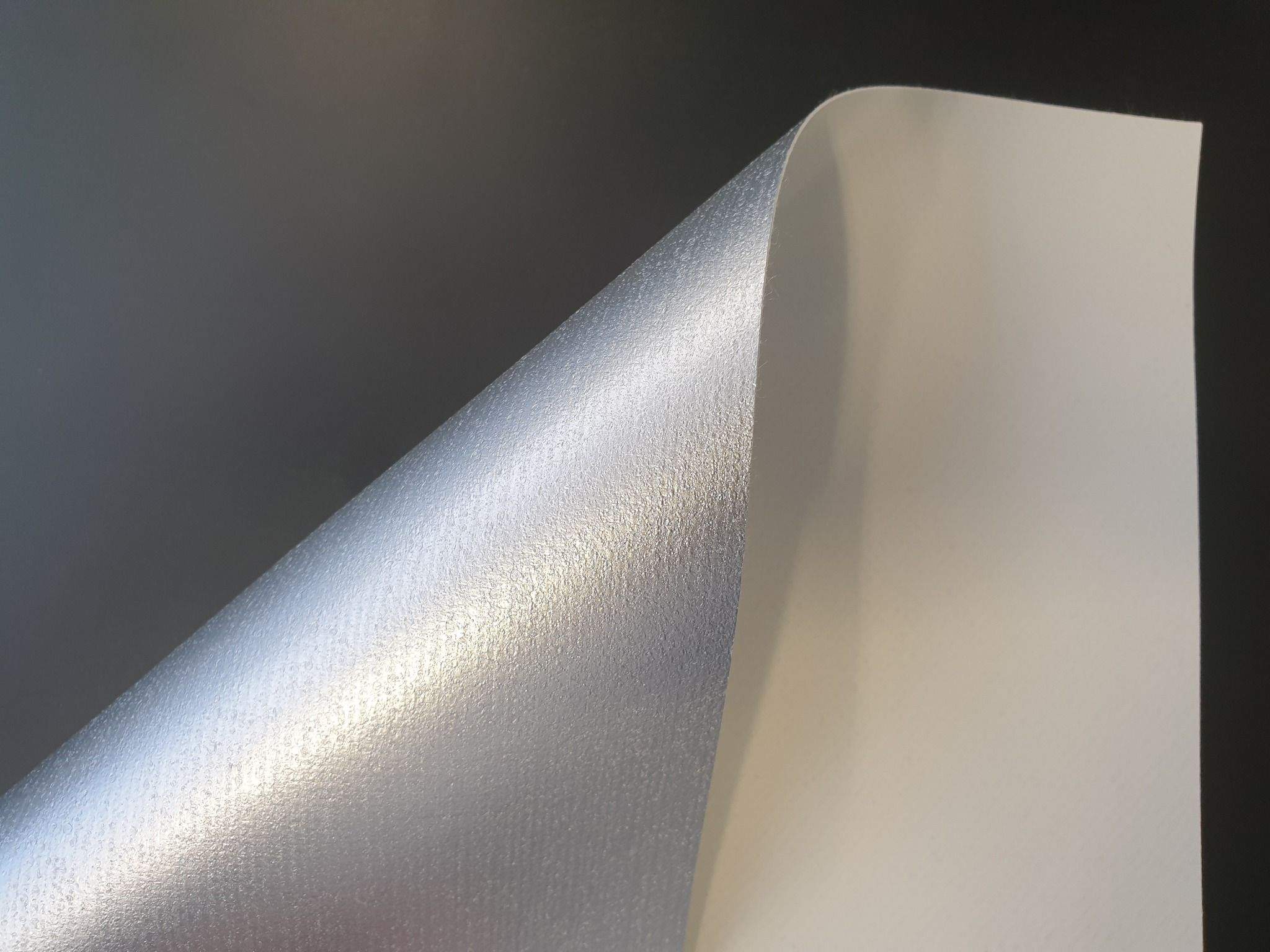
Over the course of a technical education and subsequent studies, you acquire a great deal of knowledge. You work through examples, learn established methods, and rely on standards, equations and tabulated values. I still remember building physics being part of the curriculum: thermal protection, moisture control, acoustics and other topics were calculated and discussed. At the same time, there were many values and assumptions that we simply accepted.
There is nothing unusual about this. No one can return to first principles every time a calculation is carried out.
As I became increasingly involved in membrane and tent structures, however, this began to interest me more and more. Precisely where these structures differ fundamentally from conventional building envelopes, building-physics questions are surprisingly often avoided. There are comparatively few studies that deal systematically with the thermal behaviour of extremely thin textile envelopes.
At the same time, one repeatedly encounters remarkable claims. Low-emissivity coatings, special membrane build-ups, air layers, foils, cushions or additional inserts are sometimes presented as providing exceptional thermal performance. Occasionally, a single value is quoted as evidence – without making sufficiently clear under which boundary conditions it was determined, what was actually calculated or measured, or how far the result can reasonably be transferred to another construction.
At some point, I no longer wanted to simply accept such claims at face value.
Questions from practice
There was also a very practical reason for looking more closely. In projects, conversations and discussions, I repeatedly encountered questions about exactly these issues:
What can a membrane envelope actually achieve in thermal terms? How can it be calculated? What does a second layer contribute? What effect does a low-emissivity surface have? And where are the physical limits?
There is clearly an interest in these questions. What is often missing is a transparent and reproducible route between a simple rule of thumb and an elaborate measurement or simulation.
Good laboratory testing or in-situ measurement is, of course, particularly valuable. But long before a prototype is built or a construction can be investigated under real conditions, many questions can already be explored on paper. Variants can be compared, orders of magnitude estimated and unrealistic expectations identified.
This is where the Technical Notes begin.
From a blog post to a Technical Note
The Technical Notes were originally intended as technical articles for this blog. During the work, however, it quickly became clear that some subjects could not be treated properly in just a few paragraphs. What started as a blog format gradually developed into a separate series of compact scientific and technical publications.
The intention is not to rewrite existing textbooks. What interests me is the connection between research, engineering practice and accumulated experience: revisiting established relationships carefully, making assumptions visible, bringing standards and literature together with practical questions, and developing a calculation route that remains transparent and verifiable.
Sometimes this confirms a commonly held assumption. Sometimes it puts it into perspective. And occasionally it helps to dispel a myth.
This is also what I particularly enjoy about working on the Technical Notes. Writing them is not simply a matter of passing on existing knowledge. It gives me the opportunity to revisit a subject in greater depth, question things I may previously have taken for granted, reorganise experience – and inevitably discover new questions along the way.
TN01 – Thermal Transmittance of Membrane Envelopes
The series begins with an apparently simple question:
What is the U-value of a membrane?
A conventional building envelope normally achieves its thermal performance through several layers and substantial material or insulation thicknesses. A textile membrane, by contrast, is often only around one millimetre thick.
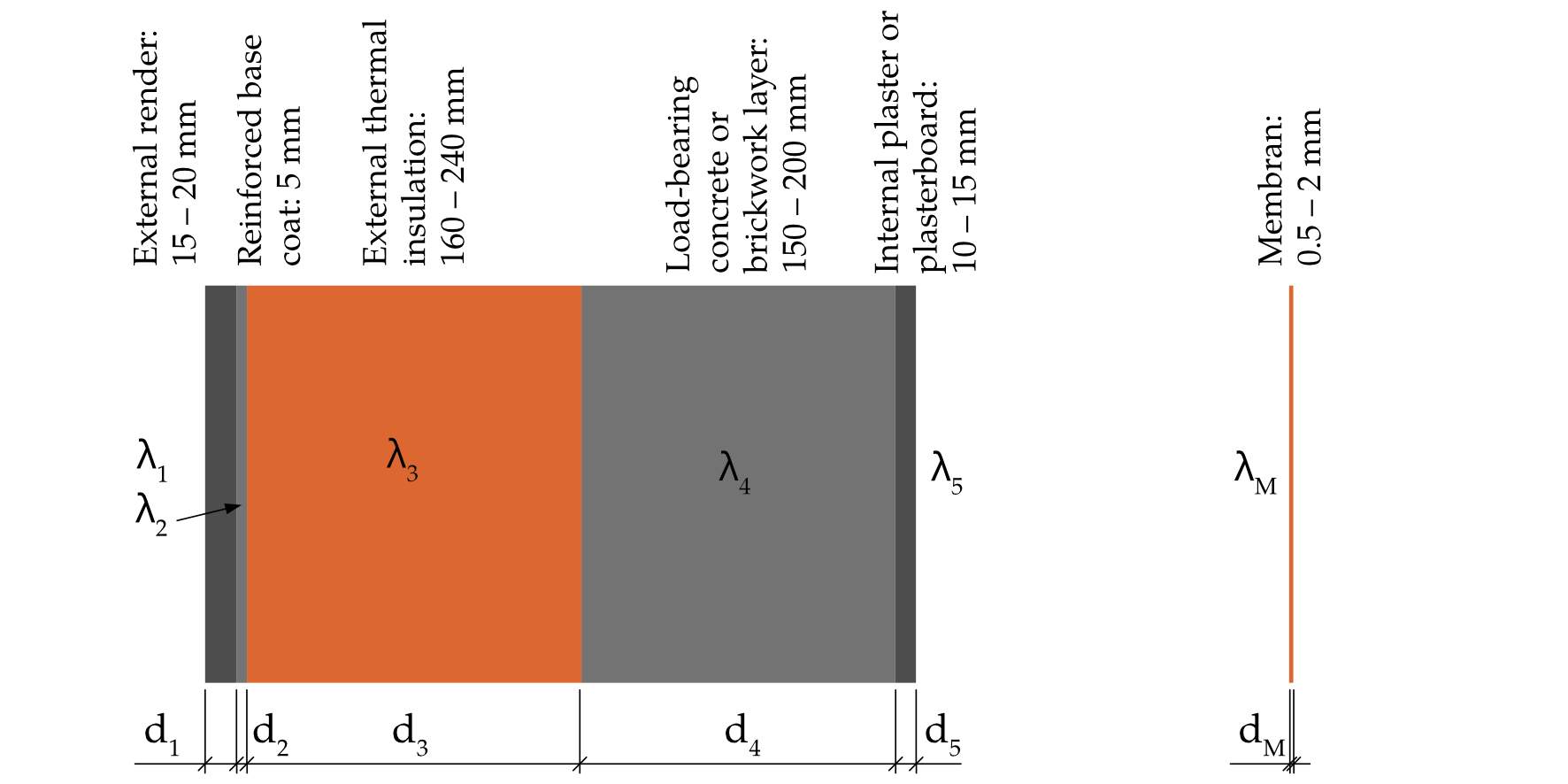
Despite this fundamental difference in construction, the underlying physics remains the same. Heat is transferred by conduction, convection and radiation. The interesting question is therefore not whether these mechanisms apply, but how their relative importance changes in an extremely thin membrane envelope.
TN01 deliberately returns to these fundamentals. Its purpose is not to produce the most impressive possible single value, but to make clear how thermal transmittance is formed, which parameters influence the result, and under which boundary conditions a calculated value is meaningful.
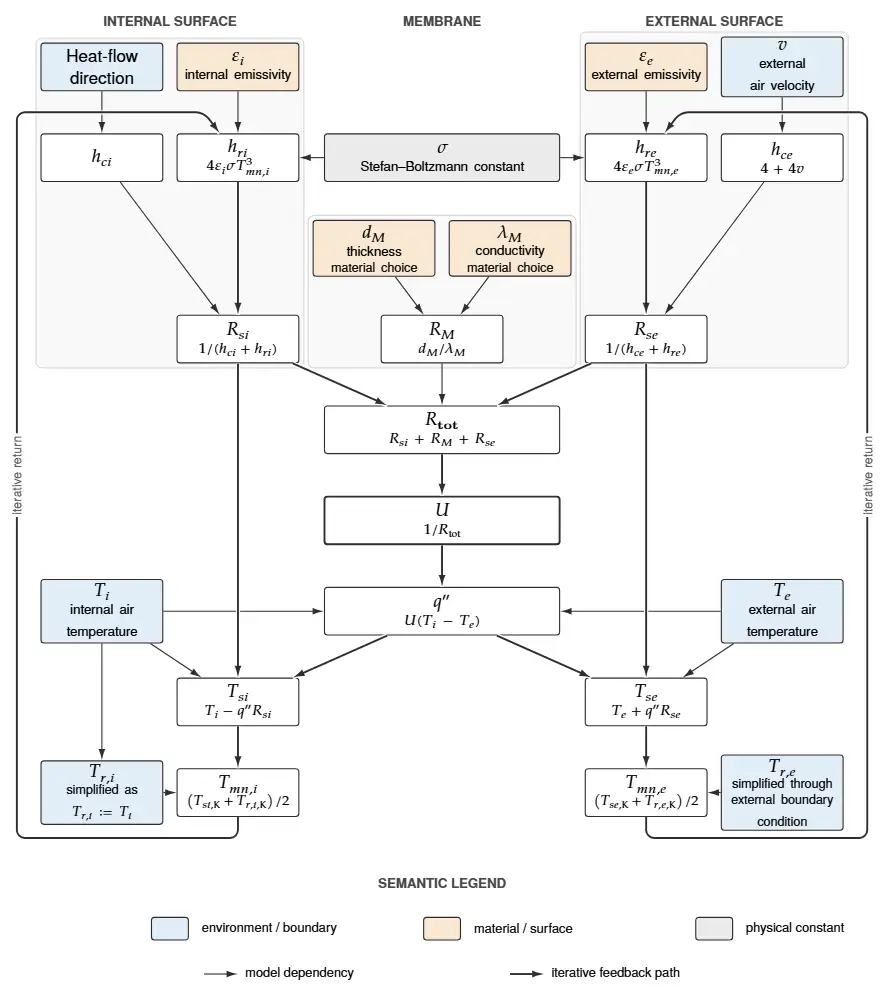
Such a model does not replace measurement. It does, however, make it possible to test hypotheses, compare variants, estimate orders of magnitude and identify physical limits at an early stage. In this way, a robust prediction can already be developed before laboratory testing or a full-scale experiment takes place – while also helping to clarify what should actually be measured later.
TN01 therefore also forms the methodological basis for the Technical Notes that follow. Topics such as low-emissivity surfaces, multi-layer membrane envelopes and the thermal behaviour of real tent structures can only be discussed meaningfully once the underlying heat-transfer mechanisms are clearly understood and properly placed in context.
I hope that the Technical Notes will become more than a record of my own work. My aim is for them to provide a useful tool for designers, engineers, students and others who want to take a closer look at these questions in membrane and tent structures.
TN01 – Thermal Transmittance of Membrane Envelopes
Scientific Edition 1.0